


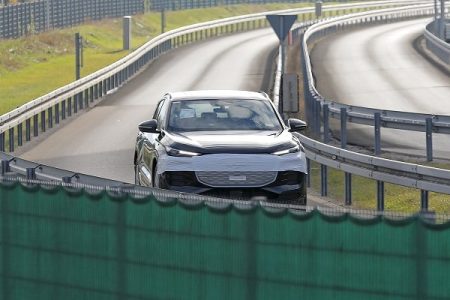
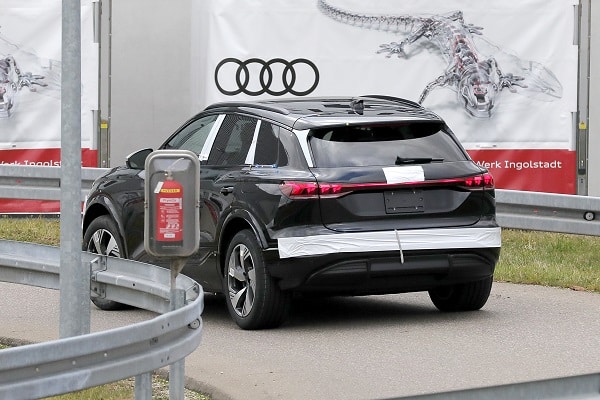
Audi and Porsche are sharing development of a new Premium Platform Electric (PPE) architecture, and one of the first Audi models to use the new underpinnings will be the Q6 e-Tron SUV. However, that “standard” SUV will be joined by a somewhat sportier “Sportback” variant soon after its release – and our spies have caught almost camo-free prototypes of both testing on a hidden track in Germany
Confirmed for launch in 2024, the SUV and Sportback variants will sit between the Q4 e-Tron, which uses the VW Group’s MEB platform, and the full-sized e-Tron flagship, which is based off a modified version of the MLB SUV architecture. Both Q6 e-Tron variants will be built in Ingolstadt, where Audi is also building a new battery production facility to serve its expanding EV line-up.

AUTOMEDIA
The Q6s will serve as sister cars to the promised electric version of the Porsche Macan – in much the same way as Audi’s e-Tron GT saloon shares the bulk of its make-up with Porsche’s Taycan. As was the case with those two cars, the Porsche will arrive several months before the Audi Q6 e-Tron SUV – and the Sportback might follow even a few months later.
The PPE architecture – based on the J1 platform used for the Taycan and e-Tron GT – is designed for full-sized luxury models from the two firms, both in low-slung and SUV forms.
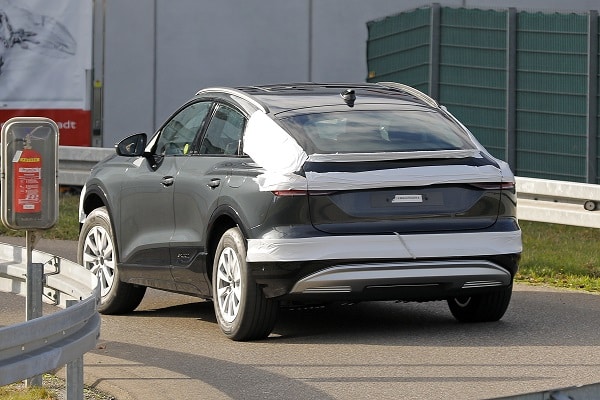
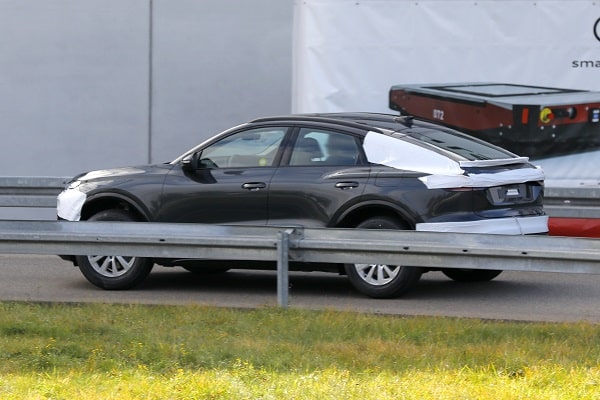
In terms of styling, our sighting of prototypes suggests heavy influence from the full-sized e-Tron, with the Q6 SUV and Sportback adopting a cab-backward silhouette and especially the Sportback a gently sloping roof line and bulky rear arches. Though both Q6s will be mechanically identical to the Macan EV, they will share little in the way of design cues.
Both Q6 e-Tron will have a more obvious performance focus than the current combustion car, given the nature of their PPE architecture. The most powerful variants, likely badged RS in line with Audi’s plan to electrify its performance sub-division, should send around 590 hp to both axles, though the PPE platform has been designed with just a rear-mounted electric motor as standard.
The PPE platform also has 800-Volts charging functionality built in, which means the Macan EV and Q6 E-Trons will be able to charge at speeds of up to 350 kW. Expect a range in excess of 500 kilometres, given the entry-level e-Tron GT is quoted to be capable of 490 kilometres per charge.
The Q6 e-Tron will offer a dynamic advantage over MEB-based electric cars from Audi and Volkswagen, too, courtesy of inbuilt torque-vectoring and rear-axle steering functionality, though these will likely be reserved for the more expensive performance options.





















No comment yet, add your voice below!